
Greek is a rich, expressive, and deeply cultural language, but it is also one that learners often find challenging. Many people start their journey full of motivation, only to feel stuck or frustrated later on. In most cases, the problem is not the language itself, but common mistakes learning Greek that slow progress and reduce confidence.
In this article, we break down the most frequent mistakes learning Greek, explain why they happen, and share practical learn Greek tips to help you avoid them and move forward with clarity and confidence.
Mistake #1: Focusing Too Much on Grammar First
One of the most common mistakes learning Greek is putting grammar above everything else. While grammar is important, starting with complex rules can overwhelm beginners and make Greek feel inaccessible.
Many learners believe they must “master” grammar before speaking. This leads to hesitation, fear of mistakes, and very limited real communication.
Learn Greek tips:
Focus on communication first. Learn useful phrases, common sentence patterns, and everyday vocabulary. Grammar becomes much easier once you have real examples from spoken Greek. Immersive programs like Courses in Athens are designed to introduce grammar naturally, through use rather than memorization.
Mistake #2: Not Speaking Greek Early Enough
Another major entry on the list of mistakes learning Greek is avoiding speaking. Many learners wait until they feel “ready,” but that moment rarely comes on its own.
Greek pronunciation, rhythm, and intonation can only improve through speaking. Avoiding it slows progress dramatically.
Learn Greek tips:
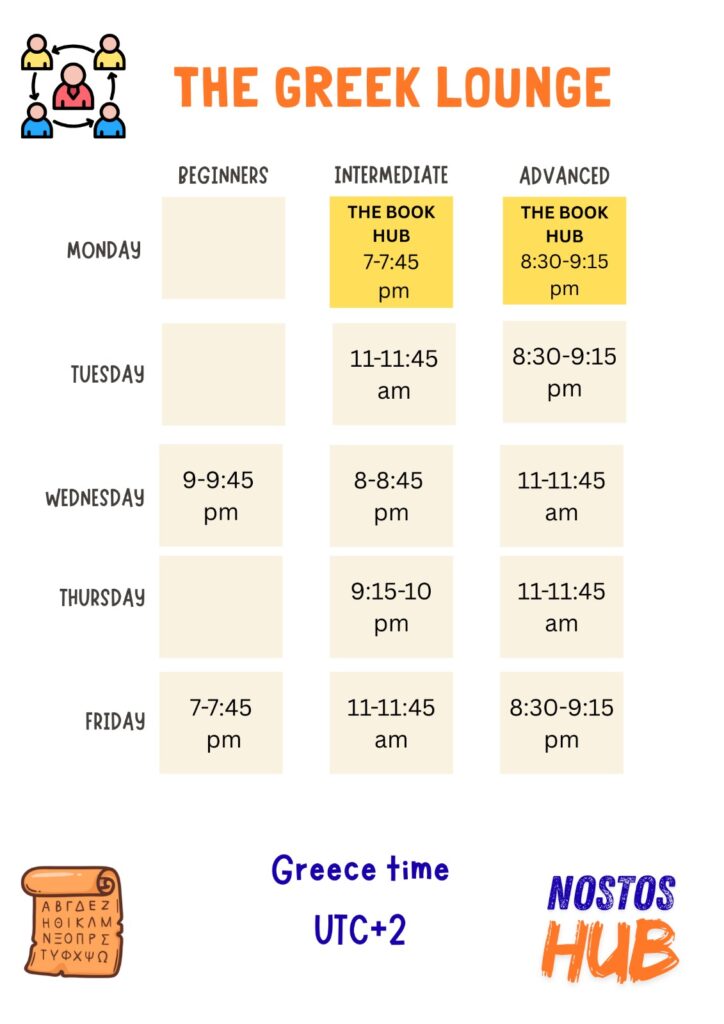
Speak from day one, even if your sentences are simple. Making mistakes is part of the process. Daily speaking practice, whether in real life or through guided sessions like The Greek Lounge, builds confidence and fluency much faster than silent study.
Mistake #3: Translating Everything Word for Word
Greek does not always follow the same structure as English or other languages. One of the most damaging mistakes learning Greek is translating directly instead of learning how Greek naturally works.
Word-for-word translation often leads to unnatural or incorrect sentences and confusion.
Learn Greek tips:
Try to understand meaning instead of translation. Learn full phrases and expressions as Greeks actually use them. Exposure to real-life Greek, spoken in context, helps your brain adjust naturally.
Mistake #4: Ignoring Listening Practice
Many learners focus heavily on reading and writing while neglecting listening. This is one of the most underestimated mistakes learning Greek.
Greek sounds fast at first, and without listening practice, learners struggle to follow conversations, even if they know the words.
Learn Greek tips:
Listen to Greek daily. Conversations, guided listening exercises, and real-life interactions help train your ear. Immersive environments and speaking-focused platforms are especially effective for developing listening skills naturally.
Mistake #5: Learning Vocabulary Without Context
Memorizing long vocabulary lists is another common mistake learning Greek. Words learned without context are easy to forget and difficult to use correctly.
Learn Greek tips:
Learn vocabulary through sentences, situations, and stories. Words stick better when they are connected to real experiences. This is why immersive experiences and cultural learning play such a big role in long-term retention.
Mistake #6: Expecting Fast Results Without Consistency
Greek, like any language, requires consistency. One of the most discouraging mistakes learning Greek is expecting rapid results without regular practice.
Studying once a week or only when motivation strikes leads to slow progress and frustration.
Learn Greek tips:
Short, daily exposure is far more effective than long, irregular sessions. Consistent practice, especially speaking, keeps Greek active in your mind. Combining structured lessons with daily speaking options helps maintain momentum.
Mistake #7: Learning Greek Without Cultural Context
Language is inseparable from culture. A very common yet subtle entry among mistakes learning Greek is studying the language without understanding how Greeks communicate socially.
Without cultural context, learners may know what to say but not when or how to say it.
Learn Greek tips:
Learn Greek together with Greek culture, gestures, tone, humor, and social norms. Cultural immersion, storytelling, and interaction with native speakers help you use Greek naturally and appropriately.
Mistake #8: Relying Only on One Learning Method
Some learners depend only on apps, others only on books, and others only on classes. Relying on a single method is one of the most limiting mistakes learning Greek.
Each method has strengths and weaknesses.
Learn Greek tips:
Combine methods. Use structured lessons, real-life speaking, listening practice, and cultural exposure together. Programs that combine immersion, online speaking, and storytelling-based learning provide a more complete experience, such as immersive courses, online speaking practice, and on-demand video learning.
Mistake #9: Being Afraid of Making Mistakes
Ironically, fear itself is one of the biggest mistakes learning Greek. Many learners stay silent because they are afraid of sounding wrong.
But mistakes are how fluency is built.
Learn Greek tips:
Accept mistakes as progress markers. Every error means you are actively using the language. Supportive environments, both in-person and online, help learners feel safe experimenting with Greek.
Mistake #10: Not Having a Clear Learning Goal
Learning Greek “just because” can be motivating at first, but without clear goals, progress can feel vague and unstructured. This lack of direction is one of the most overlooked mistakes learning Greek.
Learn Greek tips:
Define your goal. Do you want conversational fluency, cultural understanding, exam preparation, or daily speaking confidence? Different goals require different approaches, from immersive experiences to targeted online practice and exam-focused preparation.
Learning Greek the Smart Way
Avoiding these mistakes learning Greek does not mean learning perfectly, it means learning consciously. Greek rewards learners who stay curious, consistent, and connected to real communication.
The most effective learn Greek tips always come back to the same principles:
- Speak early and often
- Learn in context
- Stay consistent
- Combine methods
- Embrace mistakes
Supportive learning environments, such as those created by Nostos Hub, are designed to address exactly these challenges by combining immersion, speaking practice, cultural learning, and flexible online options.
Learning Greek is a deeply rewarding journey, but only if approached wisely. By recognizing the most common mistakes learning Greek and applying practical learn Greek tips, you can save time, reduce frustration, and enjoy the process much more.
Greek is not meant to be learned in isolation or silence. It is meant to be spoken, heard, and lived. With the right mindset, consistent practice, and the right support systems in place, progress becomes not only possible, but inevitable.