
If you are thinking about learning Greek, chances are you have already asked yourself the question: is Greek a hard language? Many learners hesitate before starting because they hear that Greek is complicated, intimidating, or too different from English to master.
The truth is more nuanced. Greek does have its challenges, especially at the beginning. But difficulty is not only about the language itself. It is also about how you learn it. When Greek is learned through immersion and real use, it becomes far more accessible than most people expect.
Why Greek Has a Reputation for Being Difficult
Greek often feels hard to beginners for a few specific reasons. The alphabet looks unfamiliar. Some sounds do not exist in English. Verb conjugations and cases can seem overwhelming when presented all at once.
These factors can create a strong first impression that Greek is unusually complex. However, this impression is often misleading. Many other languages have similar levels of complexity, but learners approach them differently.
The real issue is that Greek is frequently taught in a way that emphasizes analysis over communication. Learners are asked to understand rules before they are allowed to use the language. This delays confidence and creates frustration.
The Problem With Traditional Learning Methods
Traditional language learning often focuses on memorization. Vocabulary lists, grammar charts, and written exercises dominate the process. While these tools have value, they are not enough on their own.
When learners spend too much time studying Greek instead of using it, they develop passive knowledge. They may recognize words and understand texts, but they struggle to speak. This gap between understanding and communication makes Greek feel harder than it actually is.
Many learners conclude that they are not good at languages, when in reality they have simply not been given the right learning environment.
Why Immersion Changes Everything
Immersion shifts the focus from rules to meaning. Instead of learning about Greek, you experience Greek. You hear it daily, respond to it, and use it to express real thoughts.
This is why immersion makes Greek easier than you think.
In immersive programs like Courses in Athens, learners are surrounded by Greek language and culture throughout the day. Greek stops being an abstract system and becomes a tool for communication. Mistakes are expected, interaction is constant, and progress feels natural.
Learning Greek Fast Through Context
One of the biggest advantages of immersion is context. Words are not learned in isolation. They are connected to situations, emotions, and real experiences.
When you hear Greek used in everyday life, your brain starts recognizing patterns automatically. Grammar becomes intuitive instead of theoretical. Vocabulary sticks because it is tied to meaning.
This is why learners in immersive environments often feel they learn Greek fast, even if they are not consciously studying all the time. Their brains are constantly processing the language in meaningful ways.
Is Greek Really That Different?
Greek may look different on the surface, but it is a logical and expressive language. Once learners become familiar with the alphabet and sounds, progress accelerates quickly.
Many learners are surprised by how consistent Greek grammar is once they move beyond the beginner stage. What felt chaotic at first starts to make sense through repeated exposure.
The key is reaching that stage, and immersion is one of the most effective ways to get there.
Can You Learn Greek Through Immersion Without Living in Greece?
Physical immersion is powerful, but it is not the only option. What matters most is regular exposure and active use.
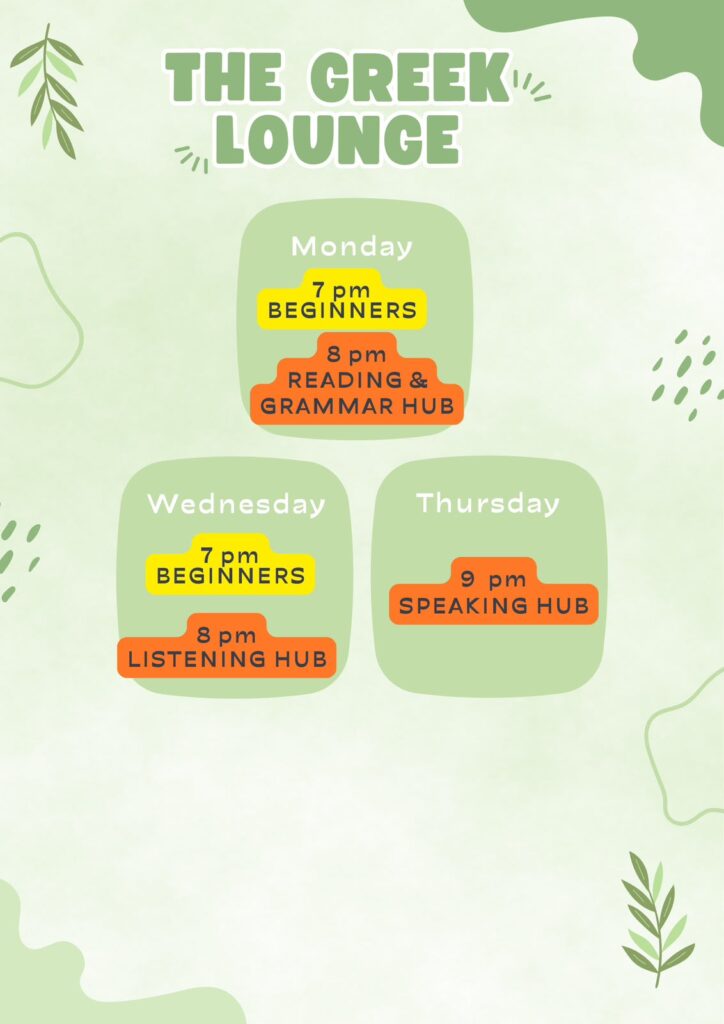
Daily online speaking environments recreate many of the benefits of immersion. Platforms like The Greek Lounge focus on real conversation instead of exercises. Learners hear natural Greek, respond in real time, and build confidence through repetition.
This kind of daily interaction helps learners stop translating and start thinking in Greek, even if they live far from Greece.
The Psychological Side of Learning Greek
Another reason Greek feels hard is fear. Fear of making mistakes. Fear of sounding unnatural. Fear of not understanding everything.
Immersion reduces this fear by normalizing imperfection. When communication becomes the goal, mistakes lose their power. Learners realize that being understood matters more than being perfect.
As confidence grows, Greek feels less intimidating and more familiar.
Is Greek Hard to Learn or Just Learned the Wrong Way?
Greek is not inherently harder than other languages. It simply requires consistent exposure and real use.
When Greek is treated as a living language instead of an academic subject, it becomes clearer, more intuitive, and more enjoyable. Learners who immerse themselves in Greek often find that the language opens up faster than they expected.
How Immersion Redefines Difficulty
Difficulty is not about complexity alone. It is about accessibility. Immersion makes Greek accessible by providing constant contact, real communication, and meaningful context.
Instead of asking whether Greek is hard, learners start asking how they can use it more often.
Final Thoughts: Greek Is Easier Than You Think
Greek can feel challenging at the beginning, but it does not have to stay that way. With immersion, regular speaking, and contextual learning, Greek becomes a language you can actually use.
If your goal is to learn Greek fast and confidently, focusing on immersion is not just helpful. It is transformative.